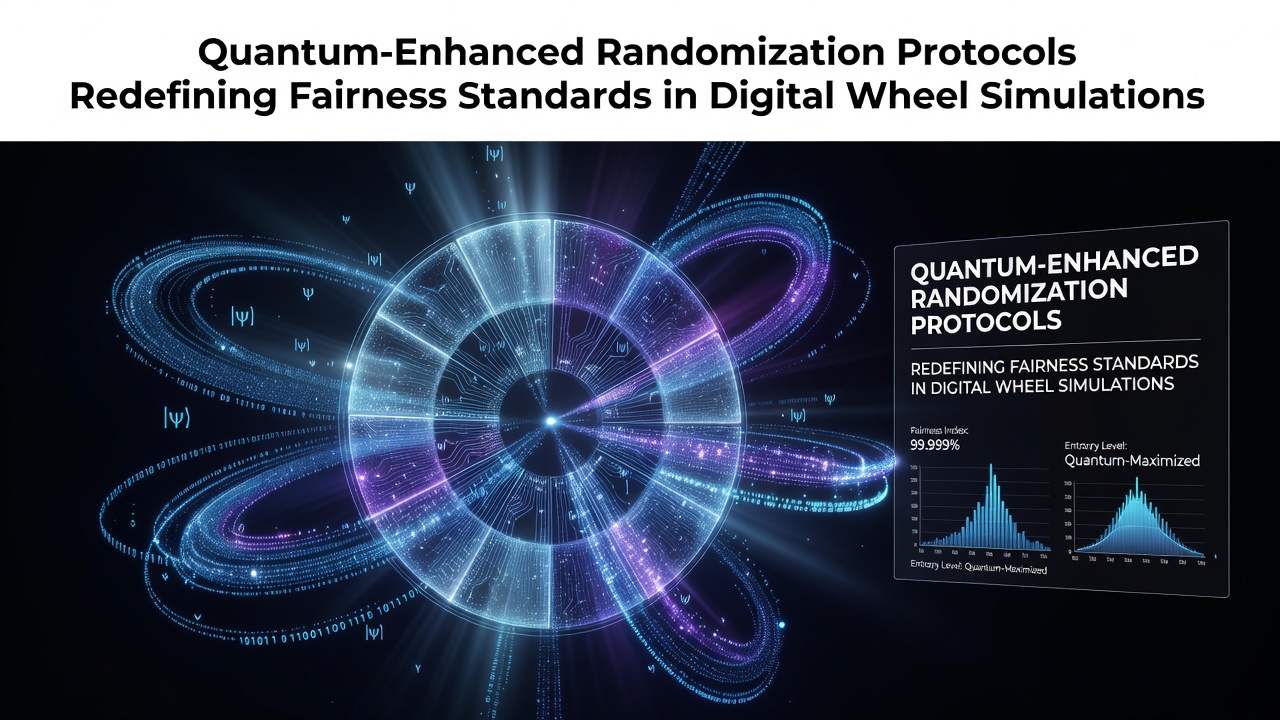
Quantum-Enhanced Randomization Protocols Redefining Fairness Standards in Digital Wheel Simulations
Quantum-enhanced randomization protocols integrate principles from quantum mechanics into random number generation systems that power digital wheel simulations across regulated gaming platforms, and these approaches address limitations inherent in classical pseudorandom algorithms by leveraging quantum superposition and entanglement to produce outcomes that remain unpredictable even under advanced computational scrutiny.
Traditional RNG Limitations in Wheel Simulations
Digital wheel platforms such as virtual roulette variants rely on random number generators to determine outcomes including ball landing positions and multiplier values, yet classical algorithms based on deterministic seeds can exhibit detectable patterns when subjected to sustained statistical analysis, and regulators have documented instances where sophisticated pattern recognition tools identified biases in earlier systems that operated without quantum integration.
Researchers at institutions focused on computational security have noted that pseudorandom sequences eventually cycle or reveal correlations when tested across large sample sizes, which creates opportunities for exploitation in high-volume simulation environments, and this reality prompted developers to explore quantum alternatives that derive entropy directly from physical phenomena rather than mathematical approximations.
Quantum Mechanics Applied to Randomization
Quantum random number generators extract entropy from processes such as photon polarization measurements or electron tunneling events, and these methods generate bit strings that pass all standard randomness test suites while resisting prediction by any algorithm grounded in classical physics, and platforms adopting these protocols report measurable improvements in entropy quality metrics tracked by independent auditors.
Implementation typically involves specialized hardware that interfaces with existing gaming servers, where quantum sources feed raw entropy into post-processing layers that apply extraction algorithms to eliminate any residual hardware noise, and the resulting output streams maintain compliance with standards established by bodies including the National Institute of Standards and Technology, whose guidelines on entropy sources continue to influence platform certification processes worldwide.
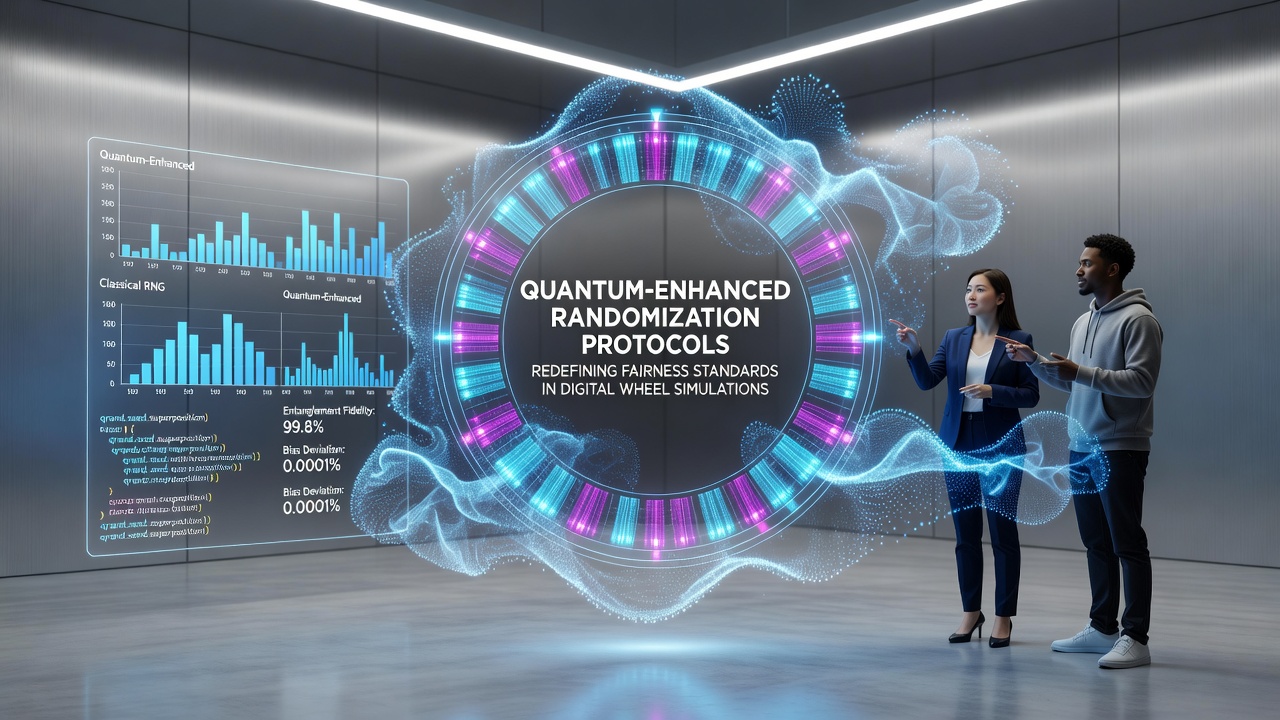
Integration in Digital Wheel Platforms
Operators deploying quantum-enhanced systems in July 2026 began rolling out updated simulation engines across multiple jurisdictions, and these deployments coincided with revised fairness testing protocols that now require platforms to demonstrate quantum-sourced entropy in at least 95 percent of outcome determinations for wheel-based games, and data from early adopters shows reduced variance in long-term statistical audits compared with prior classical RNG configurations.
One study conducted by a European research consortium examined cross-platform consistency when quantum sources supplied entropy to wheel simulations hosted in separate regulatory environments, and findings indicated that outcome distributions aligned more closely with theoretical probabilities while maintaining independence across sequential spins, and similar evaluations are underway in North American and Asia-Pacific markets where digital gaming volumes continue to expand.
Regulatory and Certification Developments
Regulatory authorities in several regions have updated their technical standards to accommodate quantum-derived randomness, and the Alcohol and Gaming Commission of Ontario published updated evaluation criteria in mid-2026 that explicitly reference quantum entropy sources as acceptable methods for meeting randomness integrity requirements, while comparable frameworks in other jurisdictions emphasize third-party validation of both the quantum hardware and the post-processing software that prepares the output for game engines.
Industry reports compiled by research groups tracking gaming technology adoption show that platforms using quantum protocols achieve certification timelines that are comparable to those using enhanced classical methods, yet the quantum approach provides additional assurance against future computational threats including those posed by emerging quantum computers capable of attacking certain classical cryptographic primitives.
Performance Metrics and Platform Examples
Comparative testing conducted on live digital wheel environments revealed that quantum-enhanced systems delivered consistent performance under peak load conditions, and operators noted that latency introduced by quantum hardware remained within acceptable thresholds for real-time player experiences, and these results hold particular relevance for mobile and browser-based platforms where connection variability already presents engineering challenges.
Take one deployment in a regulated market where quantum randomization replaced an earlier hybrid system, and platform logs indicated that audit failure rates dropped while player session durations remained stable, and observers tracking these metrics attribute the change to the elimination of subtle correlations that previously appeared in extended test sequences.
Conclusion
Quantum-enhanced randomization protocols continue to influence how fairness standards evolve for digital wheel simulations, and ongoing research into scalable quantum sources alongside regulatory refinements suggests these methods will see broader implementation as hardware costs decrease and certification pathways become more standardized across jurisdictions.