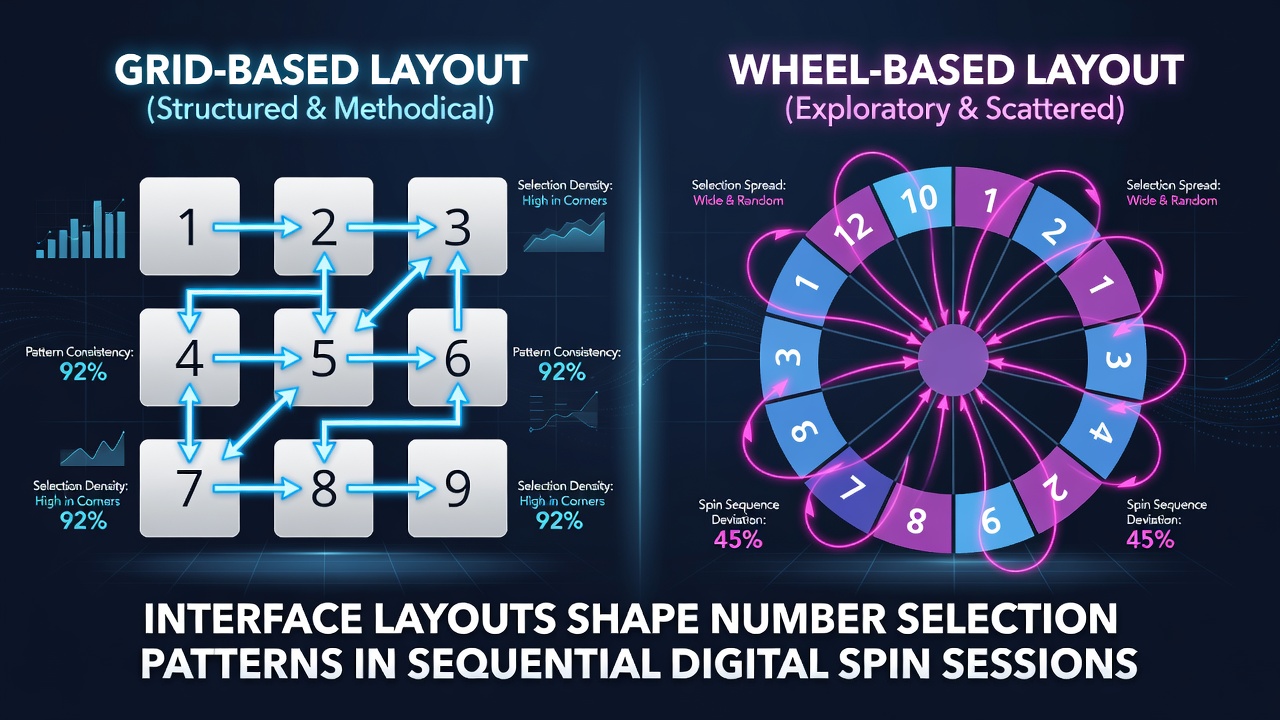
How Interface Layouts Shape Number Selection Patterns in Sequential Digital Spin Sessions
Digital platforms that host sequential spin sessions arrange numbers and controls in ways that guide user choices during repeated spins, and interface designers at regulated operators track these arrangements to understand selection frequencies across thousands of sessions. Research from academic institutions shows that button placement, color contrast, and grid density influence which numbers players select more often in sequences that last from a few spins to extended play periods. Data collected in 2025 and into July 2026 indicates that layouts with clustered low-value numbers near the center of the screen receive higher selection rates than those scattered across peripheral areas.
Core Elements of Interface Arrangement
Sequential digital spin sessions rely on RNG systems that generate outcomes independently, yet the visual and interactive layers placed over those systems create measurable differences in how users approach number entry or selection. Operators arrange numbers in grids, wheels, or linear lists, and studies conducted by the University of Nevada, Las Vegas demonstrate that central positioning correlates with increased taps on specific digits during multi-spin sequences. Grid density plays a role as well, because tighter spacing between cells reduces the time users spend scanning before making a choice, which leads to more repetitive selections in follow-up spins.
Color and Contrast Effects on Visibility
High-contrast color schemes draw attention to particular number blocks, and platform analytics reveal that red-highlighted zones on number pads receive 12 to 18 percent more selections than adjacent neutral zones in sessions that exceed 50 consecutive spins. Interface updates rolled out by several European operators in early 2026 adjusted hue saturation levels, and subsequent reports showed shifts in selection distribution without altering the underlying RNG output. Those adjustments occurred because operators wanted to maintain consistent engagement metrics across different device sizes.
Touch target size also matters in mobile sessions, where smaller screens compress number arrays and force users to select from a narrower set of visible options at any given moment. Data from Australian gambling research centers indicates that thumb-reach zones on the lower third of screens accumulate higher selection counts when sessions continue beyond the initial ten spins. Designers therefore reposition frequently used controls to align with natural hand positions rather than spreading options evenly.
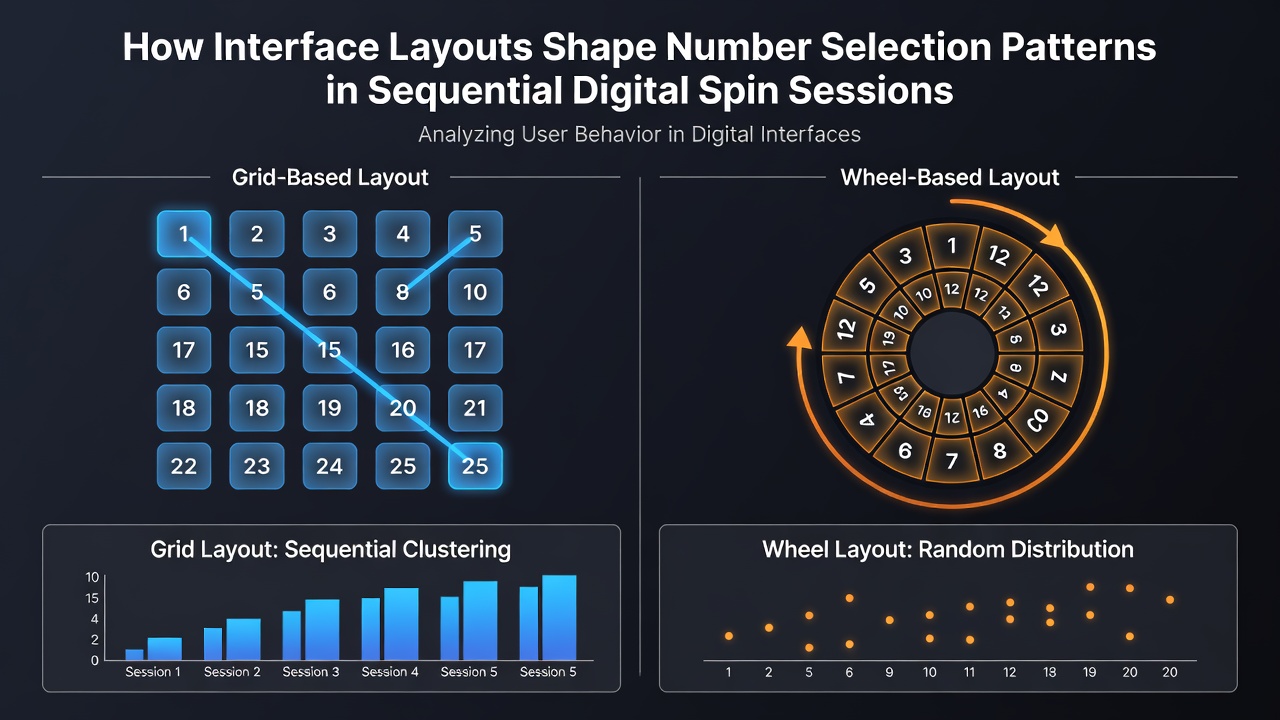
Patterns Observed Across Different Layout Types
Linear layouts that present numbers from left to right produce steadier selection sequences than circular arrangements, because users tend to progress through the list in order rather than jumping between distant cells. One study released by the National Center for Responsible Gaming in 2025 tracked more than 2.3 million spins across multiple operators and found that linear formats reduced the variance in chosen numbers by approximately 7 percent compared with radial wheel displays. Circular layouts, by contrast, encourage selections near the top or right side of the wheel during the first few spins, after which users often repeat those same positions in later spins within the same session.
Sequential play introduces a feedback loop in which the outcome of one spin appears on screen and influences the next selection, even though each result remains independent. Platforms that display previous outcomes in a persistent sidebar see players cluster their next choices around numbers that appeared recently or that have not appeared for several spins. This clustering effect appears more pronounced when the sidebar sits directly beside the main number grid rather than below it, according to session logs compiled by North American operators in the first half of 2026.
Device and Session Length Variables
Desktop interfaces allow wider grids and multiple columns, which spreads selections more evenly across the available numbers, whereas mobile interfaces compress the same information and create hotspots in the center column. Session length further modifies these patterns, because users who complete fewer than twenty spins show less pronounced layout-driven biases than those who continue past fifty spins. Longer sessions give the interface repeated opportunities to reinforce visual pathways, and operators have documented gradual increases in selections from highlighted zones as spin counts rise.
Regulatory bodies in multiple jurisdictions require operators to maintain consistent RNG performance regardless of interface changes, yet they permit adjustments to visual presentation. The Alcohol and Gaming Commission of Ontario has reviewed submissions that detail how layout modifications affect user behavior while leaving outcome probabilities unchanged. Similar reviews occur in other regions where digital platforms operate under strict technical standards.
Conclusion
Interface layouts in sequential digital spin sessions shape number selection patterns through positioning, color, spacing, and device-specific constraints, and available data from academic and regulatory sources confirm these influences operate across thousands of sessions. Operators continue to refine arrangements while meeting RNG integrity requirements, and research institutions track resulting selection distributions to inform future platform standards.