
Cross-Platform Synchronization Challenges When Matching Bonus Triggers to Roulette Variant Mechanics in Emerging Mobile Ecosystems
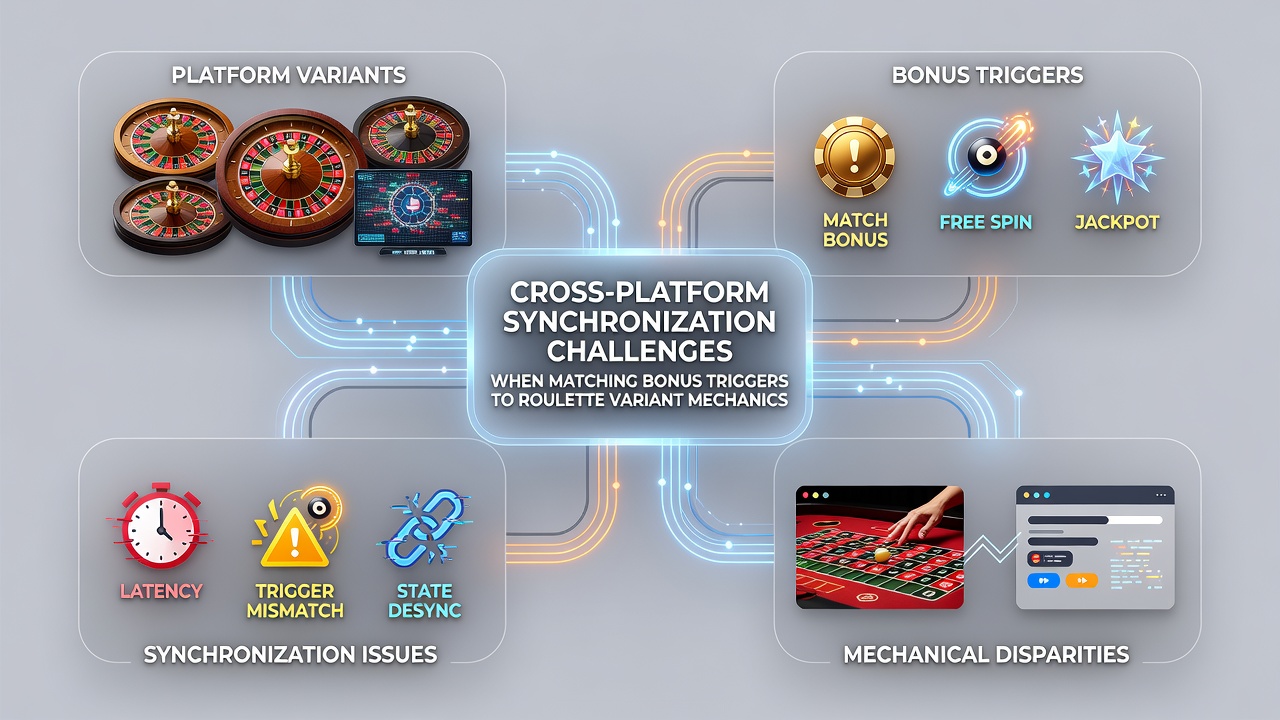
Cross-platform synchronization in mobile roulette environments involves aligning bonus activation points with the distinct mechanical rules of variants such as European, American, and Lightning formats while operating across iOS, Android, and emerging device ecosystems. Data from regulatory filings indicate that latency variations between operating systems often disrupt the timing of multiplier applications and free-spin triggers, particularly when players switch between devices mid-session. Researchers at institutions focused on digital gaming infrastructure have documented cases where bonus eligibility fails to register correctly because wheel spin sequences and payout algorithms execute at different frame rates on newer foldable screens versus standard smartphones.
Variant Mechanics and Their Impact on Bonus Alignment
Roulette variants incorporate unique elements including single-zero wheels, double-zero layouts, and multiplier zones that directly affect how bonus conditions evaluate outcomes. When a platform attempts to match a deposit bonus trigger to these mechanics, synchronization requires precise mapping of random number generator outputs to each rule set, yet mobile network fluctuations introduce delays that shift result confirmation windows. Observers note that Lightning roulette, which layers random multipliers on specific numbers, demands tighter integration than standard formats because the bonus system must verify multiplier presence before crediting rewards. Studies conducted through academic partnerships with gaming operators reveal that mismatches occur most frequently during peak usage periods when server queues lengthen across regional data centers.
Technical Barriers in Emerging Mobile Ecosystems
Emerging mobile ecosystems introduce additional variables through 5G slicing, edge computing nodes, and cross-device continuity features that attempt to preserve game state. Synchronization challenges arise when bonus engines hosted on cloud instances must reconcile state changes initiated on one handset with mechanics processed on another, especially when operating system updates alter touch input timing or graphics rendering pipelines. Figures from industry monitoring groups show error rates climbing in July 2026 as more devices adopted variable refresh rate displays, which altered how quickly players could initiate spins relative to bonus countdown timers. Platform developers address these issues through timestamp reconciliation protocols, yet packet loss on shared mobile networks continues to desynchronize the moment a variant-specific condition, such as a French roulette en prison rule, activates a reward.
Regulatory and Data-Sharing Considerations
Regulatory bodies across regions require consistent random number generator behavior and transparent bonus accounting, which places additional pressure on synchronization systems. The Nevada Gaming Control Board has outlined standards for digital platform testing that include cross-device verification of outcome integrity, while the Australian Communications and Media Authority has examined similar requirements for operators serving multiple jurisdictions. These frameworks mandate audit trails that capture every bonus trigger event alongside the corresponding wheel mechanics, yet emerging ecosystems complicate compliance because device-specific APIs handle background processes differently. One study released through university research channels highlighted that operators must maintain separate validation layers for each variant to ensure bonus conditions evaluate correctly regardless of the mobile environment in use.
Case Examples from Platform Deployments
Deployment logs from several operators illustrate recurring patterns where bonus triggers tied to specific variant outcomes fail to register across platforms. In one documented scenario, a player initiated a session on an Android tablet using an American roulette variant, triggered a deposit bonus condition, then continued on an iOS phone where the double-zero mechanic altered the expected payout sequence. The system recorded the bonus as unclaimed because the confirmation packet arrived after the variant engine had already advanced to the next spin cycle. Similar incidents appear in aggregated reports from multiple regions, underscoring that timing offsets between mobile operating systems and backend servers remain a persistent obstacle even after extensive optimization efforts.
Approaches to Improved Synchronization
Developers have implemented several technical measures to reduce these synchronization gaps. Timestamp anchoring combined with predictive state buffering allows platforms to pre-calculate possible bonus outcomes for each variant, then reconcile actual results once network conditions stabilize. Some operators integrate device fingerprinting to adjust rendering speeds dynamically, ensuring that wheel animations and bonus evaluation windows align more closely across hardware generations. Data compiled through collaborative industry projects indicate measurable reductions in trigger failures following the rollout of these methods during the first half of 2026, although complete elimination of discrepancies has not occurred in environments with highly variable connectivity.
Conclusion
Cross-platform synchronization between bonus systems and roulette variant mechanics continues to present measurable engineering and compliance challenges within expanding mobile ecosystems. Regulatory standards from multiple jurisdictions, combined with ongoing technical refinements, shape how operators manage timing consistency, state preservation, and outcome verification. Continued monitoring of deployment data will determine whether emerging solutions maintain reliability as device diversity and network architectures evolve further.